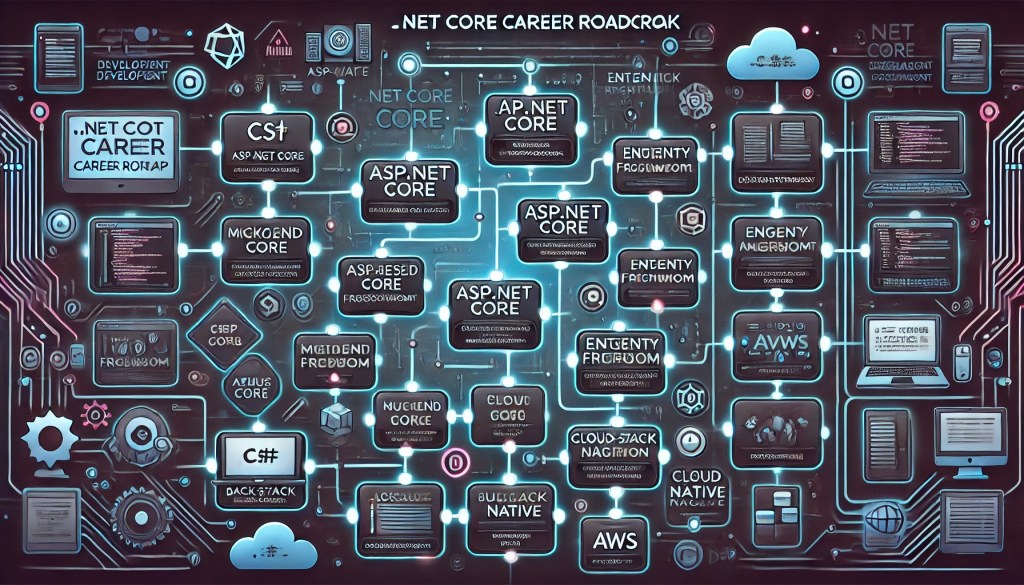
Embarking on a career in .NET Core can be an exciting and rewarding journey. The .NET Core framework, developed by Microsoft, is a versatile and powerful platform for building modern, cross-platform applications. Whether you are a beginner looking to start your journey in software development or an experienced developer aiming to enhance your skills, understanding the .NET Core Career Roadmap is crucial.
This comprehensive guide will walk you through the essential steps, from grasping the basics to mastering advanced concepts, ensuring you are well-equipped to excel in the ever-evolving tech landscape.
Before diving into the roadmap, it’s essential to understand the significance of middleware in .NET Core, which plays a crucial role in handling requests and responses. You can explore more about middleware in .NET Core to gain a deeper understanding. Additionally, honing your skills as a .NET developer involves acquiring a diverse set of competencies. To learn more about the essential dot net developer skills, you can explore the comprehensive guide that outlines the necessary abilities to thrive in this field.
Understanding the Basics of .NET Core
Introduction to .NET Core
.NET Core is an open-source, cross-platform framework designed for building modern, cloud-based, and internet-connected applications. It supports various operating systems, including Windows, macOS, and Linux, making it a flexible choice for developers. The framework’s modular architecture allows for the creation of lightweight and high-performance applications.
Setting Up Your Development Environment
To begin your journey with .NET Core, you need to set up your development environment. This involves installing the .NET SDK, choosing an Integrated Development Environment (IDE) like Visual Studio or Visual Studio Code, and configuring your workspace. Familiarizing yourself with the command-line interface (CLI) is also beneficial, as it provides a powerful toolset for managing .NET Core projects.
Your First .NET Core Application
Creating your first .NET Core application is an excellent way to get hands-on experience. Start by creating a simple console application using the .NET CLI. This process will introduce you to the basic structure of a .NET Core project, including the Program.cs file and the project configuration files.
Read More –
- How to Start a Career as an HTML Developer
- How Learning OOP Can Boost Your Software Development Career
- How to Prepare for DSA Interviews at Top Companies
- How to Start a Career in MySQL Development in 2025
.NET Core Career Roadmap: Beginner to Advanced
Learning C# Programming Language
C# is the primary language used in .NET Core development. Mastering C# is essential for building robust and efficient applications. Start with the basics of C# syntax, data types, and control structures. As you progress, delve into object-oriented programming (OOP) concepts, such as classes, inheritance, and polymorphism.
Exploring .NET Core Libraries and Frameworks
.NET Core offers a rich set of libraries and frameworks that simplify development tasks. Familiarize yourself with essential libraries like Entity Framework Core for data access, ASP.NET Core for web development, and SignalR for real-time communication. Understanding these libraries will enable you to build scalable and maintainable applications.
Building Web Applications with ASP.NET Core
ASP.NET Core is a powerful framework for building web applications and APIs. Learn how to create MVC (Model-View-Controller) applications, implement RESTful services, and manage state in web applications. Explore advanced topics like dependency injection, middleware, and authentication to enhance your web development skills.
Database Management and Entity Framework Core
Entity Framework Core is an object-database mapper that simplifies data access in .NET Core applications. Learn how to design database schemas, perform CRUD operations, and implement complex queries using LINQ. Understanding database management principles and best practices will help you build efficient and scalable data-driven applications.
.NET Core Career Roadmap: Beginner to Advanced
As you progress in your .NET Core career, it’s essential to stay updated with the latest trends and technologies. Engage with the developer community, attend webinars, and participate in hackathons to expand your knowledge and skills. Continuous learning is key to success in the ever-evolving field of software development.
Advanced Topics in .NET Core
Microservices Architecture
Microservices architecture is a design pattern that structures an application as a collection of loosely coupled services. Learn how to design, develop, and deploy microservices using .NET Core. Explore containerization technologies like Docker and orchestration tools like Kubernetes to manage microservices effectively.
Cloud-Native Development
Cloud-native development involves building applications that leverage the benefits of cloud computing. Familiarize yourself with cloud platforms like Microsoft Azure, Amazon Web Services (AWS), and Google Cloud Platform (GCP). Learn how to deploy, scale, and monitor .NET Core applications in the cloud.
DevOps and Continuous Integration/Continuous Deployment (CI/CD)
DevOps practices emphasize collaboration between development and operations teams to streamline the software delivery process. Learn how to implement CI/CD pipelines using tools like Azure DevOps, Jenkins, and GitHub Actions. Automating the build, test, and deployment processes will enhance your productivity and ensure high-quality software delivery.
Security Best Practices
Security is a critical aspect of software development. Learn how to implement security best practices in .NET Core applications, including authentication, authorization, and data protection. Familiarize yourself with common security threats and techniques to mitigate them, such as input validation, encryption, and secure coding practices.
Read More –
- SQL Career Roadmap: Steps to Becoming a Database Expert
- Essential Skills Every ASP.NET Core Developer Should Learn
- How to Get Your First Job as a .NET Developer
- Top Free Resources to Master Angular from Scratch
Career Growth and Specialization
Becoming a .NET Core Specialist
Specializing in .NET Core can open up numerous career opportunities. Consider obtaining certifications like Microsoft Certified: Azure Developer Associate or Microsoft Certified: Azure Solutions Architect Expert to showcase your skills to potential employers. Building a strong portfolio of projects and contributing to open-source initiatives can also enhance your credibility as a .NET Core specialist.
Exploring Related Technologies
To further advance your career, explore related technologies and frameworks that complement .NET Core. Familiarize yourself with front-end technologies like Angular, React, or Vue.js for building modern web interfaces. Learn about mobile app development using Xamarin or MAUI (Multi-platform App UI). Expanding your skill set will make you a versatile and valuable developer.
Networking and Community Engagement
Engaging with the developer community is essential for career growth. Attend industry conferences, join online forums, and participate in local meetups to connect with fellow developers and industry experts. Networking can lead to new opportunities, collaborations, and insights that can accelerate your career progression.
Conclusion
Embarking on a .NET Core Career Roadmap: Beginner to Advanced is a journey filled with learning, growth, and endless possibilities. From understanding the basics of .NET Core to mastering advanced topics, each step brings you closer to becoming a proficient and sought-after developer. By continuously honing your skills, staying updated with the latest trends, and engaging with the developer community, you can build a successful and rewarding career in .NET Core development.
Frequently Asked Questions
What are the prerequisites for learning .NET Core?
To learn .NET Core, you should have a basic understanding of programming concepts and familiarity with the C# programming language. Knowledge of object-oriented programming principles and experience with web development technologies can also be beneficial.
Is .NET Core suitable for beginners?
Yes, .NET Core is suitable for beginners. The framework provides extensive documentation, a supportive community, and numerous learning resources. Starting with simple console applications and gradually exploring more complex topics can help beginners build a strong foundation in .NET Core.
What are the benefits of using .NET Core?
.NET Core offers several benefits, including cross-platform compatibility, high performance, and a modular architecture. It supports modern development practices like microservices and containerization, making it a versatile choice for building scalable and maintainable applications.
How does .NET Core differ from .NET Framework?
.NET Core is a cross-platform, open-source framework designed for building modern, cloud-based applications. In contrast, the .NET Framework is a Windows-only framework primarily used for desktop and web applications. .NET Core offers a more lightweight and modular architecture compared to the .NET Framework.
What is Entity Framework Core?
Entity Framework Core is an object-database mapper that simplifies data access in .NET Core applications. It allows developers to work with databases using .NET objects and provides features like LINQ queries, change tracking, and migrations for schema management.
How can I deploy a .NET Core application?
.NET Core applications can be deployed to various environments, including on-premises servers, cloud platforms, and container orchestration systems. Common deployment methods include using IIS for Windows servers, Nginx for Linux servers, and containerization tools like Docker and Kubernetes.
What are some popular .NET Core libraries?
Popular .NET Core libraries include ASP.NET Core for web development, Entity Framework Core for data access, SignalR for real-time communication, and AutoMapper for object-object mapping. These libraries provide powerful tools and features to simplify development tasks.
How can I contribute to the .NET Core community?
You can contribute to the .NET Core community by participating in open-source projects, sharing your knowledge through blog posts and tutorials, and engaging in online forums and discussions. Attending and speaking at industry conferences and meetups can also help you connect with fellow developers and contribute to the community.
What are some common challenges in .NET Core development?
Common challenges in .NET Core development include managing dependencies, ensuring cross-platform compatibility, and optimizing performance. Developers may also face challenges related to security, scalability, and integrating with third-party services. Staying updated with best practices and leveraging community resources can help overcome these challenges.
What are the career opportunities in .NET Core?
Career opportunities in .NET Core include roles such as software developer, web developer, mobile app developer, and DevOps engineer. Specializing in .NET Core can lead to advanced roles like solutions architect, technical lead, and software consultant. The demand for skilled .NET Core developers continues to grow, offering numerous opportunities for career advancement.
 Your Blog Festival
Leave a comment